


Thickness: Plate: 0.35-200mm, Strip: 1.2-25mm
Length: 1.2m-12m or according to customer's special request
width: 610, 760, 840, 900, 914, 1000, 1200, 1250mm
Tolerance:...
Carbon Steel Coil
Your Professional Carbon Steel Coil Supplier
Establish in 2018, Hebei Dingwu Trading Co, Ltd is located in Handan Zhijiang Steel market. We are one of the biggest steel product suppliers in Handan. Our usual inventory is about 10,000 tons. We specialize in producing Steel Plate Of Astm Standard, Q235B Carbon Steel Plate, Low Carbon Steel Sheet, Carbon Steel Plate A36 for Building Material, and other Carbon Steel Plate.
-
![Carbon Steel Coil A36 ASTM]()
-
![Carbon Steel Coil Thickness]() Carbon Steel Coil ThicknessThickness: Plate: 0.35-200mm, Strip: 1.2-25mmread more
Carbon Steel Coil ThicknessThickness: Plate: 0.35-200mm, Strip: 1.2-25mmread more
Length: 1.2m-12m or according to customer's special request
width: 610, 760, 840, 900, 914, 1000, 1200, 1250mm
Tolerance:... -
![Low Carbon Steel Coil]() Low Carbon Steel CoilStandard: ASTM, AISI, GB, JIS, DIN, BS, Enread more
Low Carbon Steel CoilStandard: ASTM, AISI, GB, JIS, DIN, BS, Enread more
Thickness: 0.5-300mm or customized as required
Width: 600-3000mm or customized as required
Length: 4-12m or customized as required -
![Q235B Carbon Steel Coil]() Q235B Carbon Steel CoilStandard: GB/T709-2006, ASTM A36, JIS G4051, DIN EN 10083, SAE 1045, ASTM A29Mread more
Q235B Carbon Steel CoilStandard: GB/T709-2006, ASTM A36, JIS G4051, DIN EN 10083, SAE 1045, ASTM A29Mread more
Thickness: 0.15mm-300mm
Width: 1.5m-3m
Length: 1000mm-12000mm or according to customer's special... -
![A36 Carbon Steel Coil for Building Materials]() A36 Carbon Steel Coil for Building MaterialsCommodity: Galvanized steel coil / strips / taperead more
A36 Carbon Steel Coil for Building MaterialsCommodity: Galvanized steel coil / strips / taperead more
Techinical Standard: JIS ASTM etc.
Grade: Q195, Q235, Q345, DX51D, SGCC etc.
Types: Commercial / Drawing / Deep Drawing /...


Why choose us
Wide Product Range
Our main products are carbon steel plate, pressure vessel steel plate, boiler steel plate, checkered plate, corten steel plate, low temperature resistant low alloy plate, bridge plate, etc.
Quality Assurance
Our company have passed the dual guarantee of ISO9001:2000 quality management system certification and ISO14001:2004 quality management system certification.
Products Sell Well
We have good sales markets in North America, South America, Europe, Southeast Asia, the Middle East, Africa and other regions.
Quick Response
Our commitment is to respond to your inquiries within 24 hours, ensuring that you receive the information and support you require in a timely manner.

Carbon Steel Coil
Carbon steel coil are mainly composed of iron and carbon, with a carbon content between 0.05% and 2.0%. Carbon steel rolls with different carbon content have different hardness and strength. Carbon steel coil has good mechanical properties, such as high strength, good toughness, easy processing and welding. So it has a wide range of applications in many fields. The surface quality of carbon steel coil directly affects the quality and service life of the product, and good surface quality can improve the appearance and corrosion resistance of the product.
|
Product Name |
Hot rolled steel coil |
|
Thickness |
Plate: 0.35-200mm, Strip: 1.2-25mm |
|
Length |
1.2m-12m or according to customer's special request |
|
Width |
610, 760, 840, 900, 914, 1000, 1200, 1250mm |
|
Tolerance |
Thickness: +/-0.02mm, Width: +/-2mm |
|
Material grade |
Q195 Q215 Q235 Q345 |
|
SS490 SM400 SM490 SPHC SPHD SPHE SPHF |
|
|
SEA1002 SEA1006 SEA1008 SEA1010 |
|
|
S25C S35C S45C |
|
|
65Mn |
|
|
SPHT1 SPHT2 SPH3 SPH4 |
|
|
Others as your requirement |
|
|
Surface |
Iron gray (low carbon plate), brown (special alloy plate, the high carbon plate), partial ochre (weather resistance), with temperature oxidation pattern, than manufacture rough surface |
|
Standard |
ASTM, DIN, JIS, BS, GB/T |
|
Certificate |
ISO, CE, SGS, BV, BIS |
|
Payment terms |
30% T/T deposit in advance, 70% T/T balance within 5 days after B/L copy, 100% Irrevocable L/C at sight, 100% Irrevocable L/C after receive B/L 30-120 days, O/A |
|
Delivery times |
Delivered within 30 days after the receipt of deposit |
|
Package |
Tied up with steel strips and wrapped with water proof paper |
|
Application Range |
Widely used in ship, automobile, Bridges, buildings, machinery, pressure vessels and other manufacturing industries |
|
Advantages |
1. Reasonable price with excellent quality |
|
2. Abundant stock and prompt delivery |
|
|
3. Rich supply and export experience, sincere service |
Characteristics of Carbon Steel Coils
Carbon steel coils exhibit several key characteristics:
Strength
High tensile strength makes them suitable for load-bearing applications.
Ductility
The ability to be deformed without breaking allows for various fabrication processes.
Weldability
Easily welded, enabling complex constructions and designs.
Cost-Effectiveness
Generally more affordable than alloy steels and stainless steels.
Advantages of Carbon Steel Coils
The advantages of using carbon steel coils include:
Versatility
Suitable for a wide range of applications across different industries.
Availability
Readily available in various grades and thicknesses to meet specific needs.
Recyclability
Carbon steel is 100% recyclable, making it an environmentally friendly choice.
Performance
Offers excellent performance in terms of strength, durability, and resistance to wear.
Type of Carbon Steel Coil
The material of carbon steel coils is usually composed of iron and carbon alloys. According to the carbon content, carbon steel can be divided into the following categories:
Low carbon steel (mild steel): The carbon content is usually less than 0.3%, with good ductility, weldability and processability, and is often used in construction, home appliances and other fields.
Medium carbon steel: The carbon content is usually between 0.3% and 0.6%, with good strength and plasticity, and is widely used in machinery, automotive parts and structural parts.
High carbon steel: The carbon content is usually higher than 0.6%, with higher hardness and wear resistance, and is often used to manufacture tools, springs and knives, etc.

Application areas of carbon steel coils
Carbon steel coils are widely used in many industries due to their excellent processability and low production costs:
Construction industry:
Used to manufacture steel structures, steel beams, steel columns, roofs, etc., especially for large-scale construction projects.
Automotive industry
Used to manufacture car bodies, chassis, doors, auto parts, etc. Carbon steel coils have good ductility and can be deep stamped.
Home appliance industry
Used to manufacture the outer shell and internal parts of home appliances such as refrigerators, washing machines, air conditioners, etc., because they are easy to process and have low costs.
Machinery manufacturing
Carbon steel coils are widely used in the manufacture of mechanical parts, equipment housings, tool racks, etc.
Oil and gas industry
Used to manufacture pressure vessels, storage tanks, pipelines and other equipment, low carbon steel coils are often used for conveying pipelines and other load-bearing structures.
Shipbuilding
Carbon steel coils are widely used in the manufacture of hull structures and ship parts.
Transportation
Used to produce railway carriages, vehicle chassis, shelves, etc., especially in applications requiring strong load-bearing capacity, carbon steel coils perform very well.
Specifications of carbon steel coils
The specifications of carbon steel coils usually include thickness, width, inner diameter and outer diameter. Common specifications are:
01/
Thickness: The thickness of carbon steel coils usually ranges from 0.2mm to 6mm, which can be customized according to customer needs.
02/
Width: Common widths are 600mm, 1000mm, 1250mm, 1500mm, etc. Different widths are suitable for different industrial needs.
03/
Inner diameter: The inner diameter of carbon steel coils is usually 508mm or 610mm, which is suitable for the storage and transportation of coils.
04/
Outer diameter: The outer diameter of carbon steel coils generally ranges from 600mm to 1500mm, which varies according to the thickness and specifications of the coils.
The production process of carbon steel coils
The production process of carbon steel coils involves several stages, from raw materials to the finished product. Here's a general overview:
Raw Materials: The primary raw materials for producing carbon steel coils are iron ore, coal, and limestone. Iron ore is mined and processed into iron, which is then converted into steel through the addition of carbon and other alloying elements.
Ironmaking: Ironmaking processes such as the blast furnace or direct reduction are used to convert iron ore into molten iron. In the blast furnace method, iron ore, coke (a form of coal), and limestone are fed into the furnace, where the coke acts as a reducing agent, removing oxygen from the iron ore to produce molten iron. In the direct reduction method, iron ore is reduced directly in a furnace using a reducing gas or solid reductant.
Steelmaking: The molten iron produced in the ironmaking stage is further refined into steel through the steelmaking process. This can involve either the basic oxygen furnace (BOF) process or the electric arc furnace (EAF) process. In the BOF process, oxygen is blown into the molten iron to remove impurities such as carbon, silicon, and phosphorus, resulting in liquid steel. In the EAF process, recycled steel scrap is melted using an electric arc.
Continuous Casting: The liquid steel produced in the steelmaking process is cast into semi-finished products such as slabs, blooms, or billets through continuous casting. In this process, the molten steel is poured into a water-cooled mold, where it solidifies into a rectangular shape.
Hot Rolling: The semi-finished products from continuous casting are reheated and then passed through a series of rolling mills to reduce their thickness and improve their mechanical properties. This process is called hot rolling, and it typically involves multiple stands of rolling mills arranged in a series.
Cold Rolling: After hot rolling, the steel coils may undergo further processing through cold rolling. Cold rolling reduces the thickness of the steel coils and improves their surface finish and dimensional accuracy. Cold rolling also increases the strength and hardness of the steel.
Annealing and Pickling: In some cases, the cold-rolled steel coils may undergo annealing and pickling processes to improve their properties further. Annealing involves heating the steel coils to a specific temperature and then cooling them slowly to relieve internal stresses and improve ductility. Pickling involves removing any surface scale or oxides from the steel coils using an acid solution.
Coil Coating (Optional): Depending on the desired end use, the steel coils may undergo additional surface treatments such as coating or painting to enhance their corrosion resistance or appearance.
Cutting and Packaging: Finally, the finished steel coils are cut into specific lengths and packaged for shipment to customers, who may further process the coils into various products such as automotive parts, construction materials, or household appliances.
Each step in the production process is carefully controlled to ensure that the final product meets the required specifications for quality, strength, and dimensional accuracy. Additionally, environmental considerations are taken into account to minimize the impact of the production process on the environment.
Maintenance Tips
Alright, let’s chat about keeping your carbon steel coil in tip-top shape. Here are some handy tips:
Regular Cleaning
Keep it clean and dry to minimize rust risks.
Protective Coatings
Consider using paint or a rust inhibitor to extend its life.
Proper Storage
Store coils in a dry area and avoid direct contact with the ground.
Our Certifications

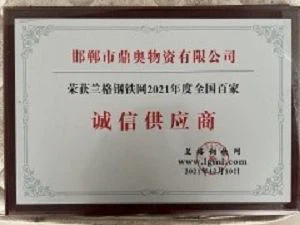

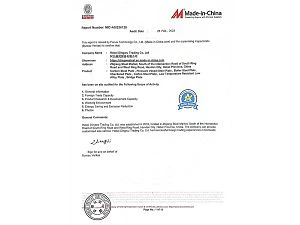
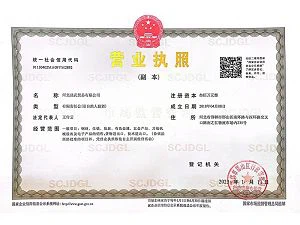
We're professional carbon steel coil manufacturers in China, specialized in providing high quality customized service. We warmly welcome you to wholesale discount carbon steel coil from our factory. Quality products and low price are available.
Carbon Steel Coil, Structural Steel Boiler Plate, Checkered Plate ASTM A36