


Classification: Hot rolled / Cold rolled
Specification: Q235B SM490 SS400 Q345B G300 G350 S275JR S355JR
Origin: China
Transport Package: Standard Export Package or Customized
Complex Section Steel
Your Professional Complex Section Steel Supplier
Establish in 2018, Hebei Dingwu Trading Co, Ltd is located in Handan Zhijiang Steel market. We are one of the biggest steel product suppliers in Handan. Our usual inventory is about 10,000 tons. We specialize in producing Steel Plate Of Astm Standard, Q235B Carbon Steel Plate, Low Carbon Steel Sheet, Carbon Steel Plate A36 for Building Material, and other Carbon Steel Plate.
-
![H-shaped Steel]()
-
![Steel Channel Beam]() Steel Channel BeamClassification: Hot Rolled, Cold Rolledread more
Steel Channel BeamClassification: Hot Rolled, Cold Rolledread more
Specification: S235jr S355jr A36 Ss400 Q235B Q345b St52
Origin: China
Transport Package: Standard Export Package or Customized -
![Steel Rail Scrap]() Steel Rail ScrapClassification: Heat Treat Railread more
Steel Rail ScrapClassification: Heat Treat Railread more
Specification: R260 / R350HT
Origin: China
Transport Package: Standard Export Package or Customized


Why choose us
Wide Product Range
Our main products are carbon steel plate, pressure vessel steel plate, boiler steel plate, checkered plate, corten steel plate, low temperature resistant low alloy plate, bridge plate, etc.
Quality Assurance
Our company have passed the dual guarantee of ISO9001:2000 quality management system certification and ISO14001:2004 quality management system certification.
Products Sell Well
We have good sales markets in North America, South America, Europe, Southeast Asia, the Middle East, Africa and other regions.
Quick Response
Our commitment is to respond to your inquiries within 24 hours, ensuring that you receive the information and support you require in a timely manner.

H-shaped Steel
H section steel, also known as H beam or I beam, is a structural steel profile characterized by its cross-section, which resembles the letter "H." This steel type is favored in construction and engineering projects due to its excellent strength-to-weight ratio and load-bearing capabilities. Typically manufactured from mild steel and hot-rolled materials, H section steel is ideal for applications that demand strong and durable structural support.
|
Classification |
Hot rolled / Cold rolled |
|
Specification |
Q235B SM490 SS400 Q345B G300 G350 S275JR S355JR |
|
Origin |
China |
|
Transport Package |
Standard Export Package or Customized |
|
Trade Mark |
Dingwu |
|
HS Code |
Standard Export Package or Customized |
Key Characteristics of H-beam Steel
01/
Load-Bearing Capacity
H-beam is known for its high load-bearing capacity. The vertical web and horizontal flanges make it an ideal structure for bearing hefty structures with large stress on both sides.
02/
Structural Stability
The wide flanges are responsible for high resistance to bending and stressing. This structure provides strong integral support for large buildings that are required to bear heavy loads.
03/
Versatility in Construction
H-beams are always flexible in the construction process. According to the requirements of each project, it can be altered. H-beams can be designed into many sizes that fit each construction project.
04/
Efficient Weight Distribution
H-beams are efficient in distributing weight across their length. It stops concentrated stress in one place and distributes the weight to the overall structure of the h-beam. It increases the overall strength of the steel structure.
05/
Cost-Effective
H-beams are always considered economical because of their availability in all places. It reduces the use of more materials needed for construction and lowers transportation costs. It provides strong support for steel structures that require high load-bearing capacity.
06/
Durable and Long-Lasting
As h-beams are made of steel, they are durable and long-lasting. Even though it is less corrosion-resistant, you need to maintain it regularly. It will add some maintenance costs.
Types of H Beams
Due to their strength and stability in spanning long distances in construction work, H beams are used in various construction applications. H beam is commonly divided into three types as follows:
Wide Flange H Beams
In wide flange H-shaped steel beams, the dimensions of the flanges and web vary depending on design requirements. These beams are primarily used as steel core columns in reinforced concrete frame structures for added strength and load-bearing capacity.
Narrow Flange H-Beams
These beams are specifically designed for load-bearing capacity and feature a narrower flange compared to wide flange beams.
Medium Flange H-Beams
One type of steel structure that is commonly used in construction and engineering projects. This type of H-beam features medium-wide flanges and is positioned perpendicular to each other.

Applications of H Section Steel
Bridges
H-beams are often used in bridge construction to provide support for the roadway and to resist the lateral loads induced by vehicular traffic.
Cranes
H-beams are used in the construction of cranes to provide strong and stable support for the machinery and the loads being lifted.
Automotive
H-beams are used in the construction of vehicles, including cars and trucks, to provide structural support and reduce the weight of the vehicle.
Aerospace
H-beams are used in the construction of aircraft and other aerospace vehicles to provide structural support and reduce the weight of the vehicle.
Defense
H-beams are used in the construction of military vehicles, including tanks and armored personnel carriers, to provide structural support and protect against ballistic attacks.
Building Construction
H-beams are used in the construction of buildings as load-bearing elements in the frame, as well as in the floors, walls, and roofs, including residential, commercial, and industrial structures.
Manufacturing Technology of H-shaped Steel
Manufacturing Methods: The manufacturing process of HH-shaped Steel involves several sequential steps, encompassing material selection, shaping, and finishing. The primary manufacturing techniques include:
Raw Material Selection
H-shaped Steel are typically fabricated from low-carbon steel or alloy steel, chosen based on desired mechanical properties and application requirements.
Hot Rolling
The fabrication process commences with hot rolling, wherein steel billets or blooms are heated to high temperatures and passed through a series of rollers to form the H shape profile.
Cooling and Straightening
The hot-rolled H shape sections undergo controlled cooling to optimize metallurgical properties and straightening to ensure dimensional accuracy.
Surface Treatment
Surface treatment methods such as shot blasting, painting, or galvanization may be employed to enhance corrosion resistance and aesthetics, depending on the intended application.
Specifications of H-beam steel
H-beam steel is available in a wide range of sizes and dimensions, allowing for flexibility in design and construction. The specific sizes and dimensions of H-beam steel can vary depending on regional standards and manufacturer specifications. However, here are some common H-beam steel sizes and dimensions:
Height (H)
The height of an H-beam steel refers to the vertical distance between the top and bottom flanges. Millimeters (mm) or inches (in) are commonly used measurement units.
Flange Width (B)
The flange width of an H-beam steel refers to the horizontal width of each flange. Millimeters (mm) or inches (in) are commonly used measurement units.
Web Thickness (t1)
The web thickness of an H-beam steel refers to the thickness of the vertical web connecting the two flanges. Millimeters (mm) or inches (in) are commonly used measurement units.
Flange Thickness (t2)
The flange thickness of an H-beam steel refers to the thickness of each flange. Millimeters (mm) or inches (in) are commonly used measurement units.
Welding H-shaped steel
Welded H steel is processed and manufactured using the H-shaped production line for assembly and welding. First, the web plate and one of the flange plates are assembled into a T shape on the H-shaped steel automatic assembly machine, and then the T shape is assembled with the other flange plate into an H-shaped member. After passing the test, it will be transferred to subsequent processes.
Cutting
Before welding the H-shaped steel web and flange plates, use a leveling machine to level the steel plates. The cutting equipment mainly uses
H-shaped steel assembly
Before assembling the welded H-shaped steel, the flange plate’s center line and the web plate’s positioning line should be marked. At the same time, the correctness of the flange plate, web number, material, size, and quantity should be checked. Assembly can only be carried out after passing the test.
H-beam welding
After the H-shaped steel assembly is qualified, it is hoisted into the gantry-type automatic submerged arc welding machine for welding. Before welding, rust, burrs, oxides, oil, and other impurities in the weld area should be removed. First, add arc starting plates and arc extinguishing plates with the same material as the components at both ends. The lead-out length of the welding seam should not be less than 50mm. Then, ceramic electric heaters were used to preheat within 100mm of both sides of the weld. The preheating temperature is 80 to 120°C. Use an infrared thermometer to measure during the heating process to prevent the heating temperature from being too high. Wait until the temperature is reached. Then, welding can be carried out.
Welding H-shaped steel correction
Welding H-shaped steel should be corrected after welding is completed. The correction can be divided into two forms: mechanical correction and flame correction. The welding angle deformation is mechanically fixed by flame baking or an H-shaped steel flange correcting machine. The corrected steel surface should not have noticeable scratches or damage; the scratch depth shall not exceed 0. 5mm. Bending and twisting deformations are updated by flame, the correction temperature is controlled at 800 to 900°C, and there must be no overturning.
Maintenance and Care Tips Steel Channel Beam
To ensure the longevity and optimal performance of steel channels, follow these maintenance and care tips
Regular Inspections
Conduct periodic inspections to check for signs of rust, wear, or structural damage.
01
Proper Storage
Store steel channels in a dry, covered area to protect them from moisture and corrosive elements.
02
Protective Coatings
Apply protective coatings or paint to steel channels to enhance their resistance to corrosion and environmental damage.
03
Cleaning
Keep steel channels clean, especially in harsh environments, to prevent the buildup of dirt and debris that can cause damage over time.
04
Our Certifications

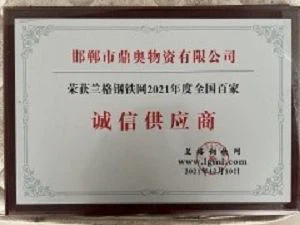


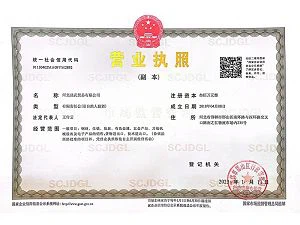
We're professional complex section steel manufacturers in China, specialized in providing high quality customized service. We warmly welcome you to wholesale discount complex section steel from our factory. Quality products and low price are available.
Q345R Pressure Vessel Plate, Pressure Vessel Plate Thickness Calculator, Complex Section Steel