


Thickness: Plate: 0.35-200mm, Strip: 1.2-25mm
Length: 1.2m-12m or according to customer's special request
width: 610, 760, 840, 900, 914, 1000, 1200, 1250mm
Tolerance:...
Steel Coil
Why Choose Us?
Establish in 2018, Hebei Dingwu Trading Co, Ltd is located in Handan Zhijiang Steel market. We are one of the biggest steel product suppliers in Handan. Our usual inventory is about 10,000 tons. We specialize in producing Galvanized Flat Coil, Gi Coil Coated, Galvanized Sheet and Coil, Galvanized Minimized Spangle Coating Coil, Galvanized Spangle Coating Coil, Checkered Coil Building Materials, Checkered Coil Floor Plate, and other Steel Coil.
Wide Product Range
Our main products are carbon steel plate, pressure vessel steel plate, boiler steel plate, checkered plate, corten steel plate, low temperature resistant low alloy plate, bridge plate, etc.
Quality Assurance
Our company have passed the dual guarantee of ISO9001:2000 quality management system certification and ISO14001:2004 quality management system certification.
Products Sell Well
We have good sales markets in North America, South America, Europe, Southeast Asia, the Middle East, Africa and other regions.
Quick Response
Our commitment is to respond to your inquiries within 24 hours, ensuring that you receive the information and support you require in a timely manner.
-
![Carbon Steel Coil A36 ASTM]()
-
![Carbon Steel Coil Thickness]() Carbon Steel Coil ThicknessThickness: Plate: 0.35-200mm, Strip: 1.2-25mmread more
Carbon Steel Coil ThicknessThickness: Plate: 0.35-200mm, Strip: 1.2-25mmread more
Length: 1.2m-12m or according to customer's special request
width: 610, 760, 840, 900, 914, 1000, 1200, 1250mm
Tolerance:... -
![Low Carbon Steel Coil]() Low Carbon Steel CoilStandard: ASTM, AISI, GB, JIS, DIN, BS, Enread more
Low Carbon Steel CoilStandard: ASTM, AISI, GB, JIS, DIN, BS, Enread more
Thickness: 0.5-300mm or customized as required
Width: 600-3000mm or customized as required
Length: 4-12m or customized as required -
![Q235B Carbon Steel Coil]() Q235B Carbon Steel CoilStandard: GB/T709-2006, ASTM A36, JIS G4051, DIN EN 10083, SAE 1045, ASTM A29Mread more
Q235B Carbon Steel CoilStandard: GB/T709-2006, ASTM A36, JIS G4051, DIN EN 10083, SAE 1045, ASTM A29Mread more
Thickness: 0.15mm-300mm
Width: 1.5m-3m
Length: 1000mm-12000mm or according to customer's special... -
![A36 Carbon Steel Coil for Building Materials]() A36 Carbon Steel Coil for Building MaterialsCommodity: Galvanized steel coil / strips / taperead more
A36 Carbon Steel Coil for Building MaterialsCommodity: Galvanized steel coil / strips / taperead more
Techinical Standard: JIS ASTM etc.
Grade: Q195, Q235, Q345, DX51D, SGCC etc.
Types: Commercial / Drawing / Deep Drawing /... -
![Checkered Coil A36]() Checkered Coil A36Standard: ASME, ASTM, EN, BS, GB, DIN, JIS etc.read more
Checkered Coil A36Standard: ASME, ASTM, EN, BS, GB, DIN, JIS etc.read more
Technique: Hot Rolled
Surface: Chequered
Packing: In standard export package or as required -
![Checkered Coil Q235B]() Checkered Coil Q235BStandard: AISI, ASTM, BS, DIN, GB, JISread more
Checkered Coil Q235BStandard: AISI, ASTM, BS, DIN, GB, JISread more
Surface: Mild steel plain finish, hot dip galvanized, ect.
Size Tolerance: +/- 1%~3%
Yield Strength: 250~600 MPa -
![Checkered Coil Floor Plate]() Checkered Coil Floor PlateStandard: AISI, ASTM, BS, DIN, GB, JISread more
Checkered Coil Floor PlateStandard: AISI, ASTM, BS, DIN, GB, JISread more
Surface: Mild steel plain finish, hot dip galvanized, ect.
Size Tolerance: +/- 1%~3%
Yield Strength: 250~600 MPa -
![Checkered Coil Building Materials]() Checkered Coil Building MaterialsItem: MS Hot Rolled Steel Plateread more
Checkered Coil Building MaterialsItem: MS Hot Rolled Steel Plateread more
Material: Q235 SS400 A36
Thickness (mm): 6-25
Width (mm): 1500 - 2500
Length (mm): 4000 - 12000 -
![Galvanized Spangle Coating Coil]() Galvanized Spangle Coating CoilThickness: 0.11mm-4mmread more
Galvanized Spangle Coating CoilThickness: 0.11mm-4mmread more
Width: 600mm-1500mm
Zinc Coating: 30~400GSM
Spangle: Zero spangle, regular spangle or large spangle -
![Galvanized Minimized Spangle Coating Coil]() Galvanized Minimized Spangle Coating CoilTechnical Standard: EN10147, EN10142, DIN 17162, JIS G3302, ASTM A653read more
Galvanized Minimized Spangle Coating CoilTechnical Standard: EN10147, EN10142, DIN 17162, JIS G3302, ASTM A653read more
Type: Coil / Sheet / Plate / Strip
Thickness: 0.12-6.00mm, or customer's requirement
Width: 600mm-1500mm,... -
![Spangle-free Coil DX51D+Z+80g]() Spangle-free Coil DX51D+Z+80gType: Coil / Sheet / Plate / Stripread more
Spangle-free Coil DX51D+Z+80gType: Coil / Sheet / Plate / Stripread more
Thickness: 0.12-6.00mm, or customer's requirement
Width: 600mm-1500mm, according to customer's requirement
Type of Coating: Hot Dipped...


What is Steel Coil
Steel coils are long, flat strips of metal that have been rolled to form coils. It is then transported to a manufacturing facility where it is uncoiled and cut into sheets or plates. The thickness and width of the steel coil may vary depending on the intended use. Steel coil is typically made from hot-rolled or cold-rolled steel and is used in various industrial applications, including the manufacturing of automobiles, construction materials, and appliances. Coils are available in different sizes and thicknesses and are often coated with protective materials to prevent corrosion or damage. If you want to know the specifications and prices of Steel Coil, please contact us!
Advantage of Steel Coil
Low Maintenance
Steel coils are low maintenance. You only have to remove them, wash them off, and reinstall them. In addition, cleaning steel coils is not laborsome nor expensive. These days it's crucial to spend your money wisely by purchasing the highest-quality and most affordable steel products.
Durable and Resistant to Heat
Coils that are made from steel are extremely sturdy, and strong, and have resistance to heat, cold, or eroding. That's why we make sure to manufacture steel coils that can tolerate both extreme heat and cold elements without breaking or cracking in time.
On top of that, with galvanization, the life expectancy of a steel coil can last 50 years. This is because galvanization increases the corrosion resistance of the steel through a protective zinc coating.
Offers Lower Energy Bills
The main reason why industries are using steel coils is that they can conserve energy. Steel coils help to lower your energy bills with their capacity to retain heat even when exposed to extreme hot or cold weather, as previously mentioned.
Safe To Use
Fortunately, steel coils have no toxins which make them safer to use.
Finest Look
Steel coils can be easily fabricated and joined resulting in the finest look or beauty that your project needs. Many architects, consumers, and even us here at Metal Exponents highly appreciate the beauty of steel coils in terms of their look and design flexibility.
Lower Environmental Impact
Industries are fully aware of the safe materials and lower environmental impact of using steel coils. Steel coils are 100% recyclable, which means these can be recycled into a material of the same quality.
That's why at Metal Exponents, we are continuously evolving our process of fabricating steel coils to be more innovative and higher-quality, yet with lower environmental impact.
Affordably Priced
Steel coils are known for being extremely sturdy and for their longevity, which allows you to save more money over time. At Metal Exponents, our steel coil price varies on the size you need, but we make sure to give an affordable price to our customers in addition to providing them with the highest-quality steel coils that they deserve.
Type of Steel Coil


Hot-Rolled Coil
Hot-rolled coil is produced from semi-finished products , which are reduced to certain thicknesses by rolling and annealing and wound into a roll. Hot-rolled steel is used e.g. for the manufacture of pipes, steel doors and tanks or is further processed into cold-rolled steel.
Cold-Rolled Sheet
Cold-rolled sheet in coil form is produced by removing rust from hot-rolled sheet by "pickling" it in a weak acid solution, then washing, brushing, drying, oiling and unrolling the sheet and finally performing cold-rolling by passing the sheet through a reducing mill under pressure and winding it into a roll. Cold-rolled steel is a more highly finished product and has a smoother surface, greater dimensional accuracy (thickness, width, length) and greater strength. Much cold-rolled steel is processed in the automotive industry, but some is also used in the manufacture of household goods.
Stainless Steels
Stainless steels are distinguished from carbon steel by their chromium content and, in certain cases - nickel. Adding chromium to carbon steel makes it more rust and stain-resistant, and when nickel is added to chromium stainless steel it enhances its mechanical properties, for example its density, heat capacity and strength. Stainless steel sheet is used, for example, in the manufacture of machinery, tools and containers.
Carbon Coil
Carbon coil, a type of steel that generally has only a small quantity of elements other than carbon, silicon, manganese, sulfur and phosphorus, so it has no significant alloying element. Carbon coil is good for second grade applications placing no particular demands on surface quality. ANSON's carbon coil steel comes in a variety of grades and thicknesses to support the countless applications of this metal. We offer carbon coil in hot rolled, cold rolled, galvanized, aluminized and painted.
Galvanized Coil
Galvanized coil produced when hot or cold rolled sheet or strip is coated with zinc, either by the hot-dipping or electrolytic deposition processes. Zinc coating applied by the hot dip method is normally heavy enough to resist corrosion without additional protective coating. Materials electronically galvanized are not used for corrosion-resistant applications without subsequent chemical treatment and painting, except in mild corrosive conditions, due to the thin coating of zinc. Galvanize is a pure zinc coating. A special heat-treating process converts the pure zinc coating to a zinc/iron alloy coating, and the product is known as Galvanneal. Galvanized sheet is used, e.g. in the automotive industry or in the production of roofing materials (e.g. flashing, guttering).
Application of Steel Coil
Pipe-Manufacturing
The most common use for steel coils can be found in pipe manufacturing. Pipes such as ERW (Electronic Resistance Welding) and seamless pipes begin with an uncoiled sheet of metal that passes through a continuously rolling machine. The aim of this method is to fuse the two joints of the rolling process through ERW without using any welding filler compound. As ERW pipes do not depend on heat furnaces or high-temperature, it's classified under cold-forming pipe manufacturing which reduces internal stresses of the pipe, whether during storage or in use.
An alternative pipe-making technique is used for spiral pipes, however, it still begins with a sheet of metal that is wound at an angle. This will allow the weld to run around the outer surface of the pipe in order to form a helix-like structure with the joints all welded together.
Structural Steel Members
In applications wherein high tolerances are not necessarily required, steel coils are preferred. This is due to the high weld-ability, ductility, and machinability of the steel sheets when they're unwound. Using any type of metal fabrication machine, press breaks, or stamping machine, steel coils can be transformed into exceptional structural steel members, such as I-beams, H-beams, angle bars, wide flange beams, and more.
Structural steel members are found in almost every type of building. For example, they provide framework support for a structure's walls or enclosures. Steel beams are sturdy enough to support different building materials and they can also be joined using different types of couplings or steel connections. These beams can also be found in a building's ceiling structure - steel trusses and rafters provide ample support to resist wind loads and keep the ceiling structure intact.
Electronic Equipment
Steel has a high melting point, making sheet metals suitable for use in electronic goods. Some examples would be CPU housings, mobile phone cases, heat sinks, iron cores, circuit boards, and the like. As these components require electrical energy to function, they may end up producing high heat levels that can affect the other parts.
Fortunately, the high melting point of steel coils allows all of these parts to work together without the anger of high temperatures that may destroy the parts. Steel coils also make a good choice because they are easy to fashion and require very little maintenance. Any electronic device that you have at home, made out of steel is a cost-effective purchase due to the material's properties.
Automotive Parts
Automotive parts manufactured from steel coils can be found almost anywhere in a vehicle - from the chassis framework, car doors, exhaust, dashboard system, wheels, rims, engine, suspension, and the like. The high strength-to-weight ratio, durability, heat resistance, and non-combustibility of steel coils make them ideal due to the heat produced in a vehicle's combustion engine. Like electronic consumer goods, vehicle parts will remain intact when steel coils are used.
Aside from these already-existing automobile parts. Products made out of steel coils have also been the go-to material for car manufacturers. Steel coils can be recycled endlessly and indefinitely without losing their most crucial properties. Any scrap steel coil can be refined and milled again to become new vehicle parts. Moreover, car components and vehicle manufacturers are constantly experimenting with steel to come up with innovative solutions to improve vehicle safety and user experience.
Metal Stamped Parts
Finally, on a broader application, steel coils are widely used in different metal stamping processes like shearing, notching, flanging, or cutting. Once again, steel coils are extremely malleable, whether for hot-forming or cold-forming stamping. They can easily be shaped in any kind of form and can be used for achieving high tolerances.
Metal-stamped steel coils have benefitted all industries - from automotive, industrial, petrochemical, logistics, construction, food & beverage, and many more. In fact, almost all steel products that you'll find around you are made out of stamped steel coils, making them a versatile material.
Key Takeaway
As discussed in this article, steel coil uses can be classified into the following: pipe-making, steel beams/members, automotive components, metal stamped parts, and electronic devices. Although steel coil manufacturing seems simple - i.e. by beginning with a semi-finished steel slab - it has been essential in delivering different types of finished steel parts and goods to be used in different ways.
How to Choose Steel Coil
Corrosion Resistance
This topic of corrosion resistance is extremely important to know when purchasing stainless steel products. The standard grade most commonly used for food grade applications is AUSTENITIC STAINLESS STEEL. Due to its chemistry, austenitic stainless steels show tremendous resistance to basic corrosive environments containing only salt and water. Specifically, our 304 – grades (including but not limited to), include 18/22, 20/30, 15/25, and 10/15. Use the proper grade based on your installation environs; atmospheric conditions such as air quality, moisture content, and acidity levels can greatly increase the corrosion rate of a product.
Resistance to Heat
Many More customers choose stainless steel coils because they can use them everywhere without any concern about the corrosion. Temperature is a factor to consider when purchasing stainless steel products. High temperatures, such as in a furnace environment of (900 – 1175C) can increase the corrosion of stainless steel products. Moreover, high temperature exerts high pressure on the products. So you will have to purchase heat-resistant stainless steel, such as 253MA and 321MA if the temperature is always high.
Cryogenic Resistance
Austenitic stainless steel is more efficient at low temperatures. They can maintain a higher tensile strength at low temperatures compared to ambient temperatures. Regardless of degrading and toughness, such steel is suitable for low temperatures. Cryogenic resistance means that the materials ability to withstand decreased material temperature after exposure to increasing pressures. You must check cryogenic resistance to know which one is better for you.
Magnetic Response
Austenitic and ferritic grades of stainless steel typically have a lower magnetic content, whereas chromium-based grades are more magnetically active. You must check the magnetic response for each type of grade; austenitic is not as strong as carbonitride and 310, 316, and 430 grade steels so these all tend to show very little effect. Martensitic Stainless with higher magnetic content such as 310, 320, 330, 410, and 416 , which are not magnetic but can be made into hardware that is by using posthardening processes such as nitriding, has deep cryogenic Tempering to achieve those characteristics. Duplex grades like 2205 and 2201 are ferromagnetic while others like 400CN and 452CBM are paramagnetic.
Cost
Cost is one of the most important factors when buying stainless steel coil. Stainless steel of high price can be worth the money as it can run for a longer time. So you need to access the costs depending upon the basis of the life cycle. Different 201 stainless steel coil sell the products at different costs.
Strength Required
It can be quite complex to know the steel strength that you require. The strength requirement depends upon the installation environment and the purpose of installation. In some cases, high-strength duplex and austenitic stainless steel are suitable. But in some cases, these can be the most unsuitable as they cannot meet your requirements. So you must check the strength that is required for your work.
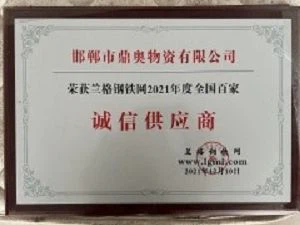
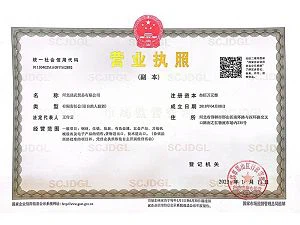
Certifications
Frequently Asked Questions
Q: Who uses steel coils?
A: Steel coil uses can vary depending on the industry, but it has numerous popular and widely-known applications such as pipe-manufacturing, structural steel members, electronic components, consumer goods, automotive parts, and many more.
Q: How many types of steel coils are there?
A: In the light of experience gained during these years, we classifies steel coils into hot and cold- rolled types, or stainless steel coil, carbon coil and Galvanized Steel according to current products and international standards.
Q: What is a stainless steel coil?
A: A stainless steel coil is a flat-rolled, continuous sheet of stainless steel that has been wound into a coil shape. Stainless steel is an alloy of iron, chromium, and various other elements, and it is highly valued for its resistance to corrosion, staining, and rust.
Q: What is the difference between steel coil and steel strip?
A: There are no difference between coils and strips but the width. Coil is reduced into multiple narrower coils, that's called strip normally. How to handle steel strip and steel coil? Instead of lifting tongs and grips, we recommend a safer and more efficient way of steel material handling - magnetic lifting technology.
Q: What are steel coils made of?
A: Steel coils are made by taking a long strip of steel and rolling it into a coil. The coil is then passed through a series of rollers that gradually decrease the thickness of the steel strip. The final product is a thin, flat sheet of steel that can be used in a variety of applications.
Q: Why is steel coil hot?
A: Hot rolling, the process used to make hot rolled steel, involves rolling steel at high temperatures (typically over 1700˚F). These high temperatures are above steel's recrystallization temperature, allowing the steel to be easily shaped, formed, and made in larger sizes.
Q: What is an example of a coil?
A: A coil is a spiral shape or a series of circles, each one inside another. You might see a coil of rope on a dock or coils of hair in a fancy hairdo. A snake naturally curls its body into a coil, and the end of a whip after it's been cracked tends to form a coil.
Q: What's the definition of a coil?
A: Noun. a connected series of spirals or rings that rope, wire, or the like has been formed into: A coil of string was wound around the pole. one of a connected series of spirals or rings that rope, wire, or the like has been formed into: Grab the first coil of the yarn and slip it over the other two.
Q: How big is a coil of steel?
A: Coil weights are between 5 to 15 tons per unit with a width of plating from about 900 to 1.300 mm. Coil diameters of from 1.000 to 1.400 mm are about average. Apart from being wound into coils the continuous strip, or band of steel, is also cut into separate sheets which are made up into oblong packages.
Q: What is a steel master coil?
A: Master Coil – A wide roll of coiled steel from a steel mill which will be slit into multiple narrower coils. Matte Finish – Standard finish of Cold Rolled Steel.
Q: Can steel coils rust?
A: Even steel coil processors who use dry pickling or no pickling at all can experience corrosion in-process or during transit as the coils pass through extreme climates or unpredictable shipping conditions. Without adequate protection, the cost of corrosion can add up substantially over time.
Q: Are stainless steel coils better?
A: Longer Lifespan: Stainless steel wire is more durable than kanthal or nichrome wire. It can withstand higher temperatures and is less prone to breaking or snapping. This means that your coils will last longer and require less frequent replacement.
Q: How hot is a steel coil?
A: The most formable standard grade of hot-rolled mild steel often contains 0.03–0.06% carbon, 0.003–0.006% nitrogen, 0.2–0.3% manganese, and 0.03–0.06% aluminum and is processed using a moderately high coiling temperature (∼650°C).
Q: What causes coil break in steel?
A: The formation of coil breaks depends on many factor, including the steel chemistry and microstructure, hot rolling parameters, the geometry of the strip (waviness, crossbow, crown etc.), the parameters of uncoiling such as speed, coil temperature, mechanical alignment, stiffness or mechanical vibration of the uncoiling equipment. It is almost impossible to avoid completely this surface defect, although a plenty of attempts have been made.
Q: How are steel coils measured?
A: All we need is measuring the coil outer diameter, inner diameter and thickness. Volume will be in cubic millimeters. To obtain the coil length we have to divide the result by the section of the coil determined by coil width and thickness.
Q: How do you store steel coils?
A: Vertical storage of coils can help prevent deformation and damage, especially to the edges of the reels. Use wooden blocks or metal chocks between the reels to prevent movement, rolling, and potential damage. Anchor the reels securely to prevent them from tipping.
Q: What are steel coils made of?
A: Steel coils are made by taking a long strip of steel and rolling it into a coil. The coil is then passed through a series of rollers that gradually decrease the thickness of the steel strip. The final product is a thin, flat sheet of steel that can be used in a variety of applications.
We're professional steel coil manufacturers in China, specialized in providing high quality customized service. We warmly welcome you to wholesale discount steel coil from our factory. Quality products and low price are available.
Steel Pipe, Low Alloy High Strength Plate S355JR, Simple Shape