


Thickness: 2-300mm
Width: 1000-3000mm
Length: 1000~12000mm or as request
Technique: Hot-rolled, controlled rolling, normalizing or as required
High Strength Low Alloy Plate
Your Professional High Strength Low Alloy Plate Supplier
Establish in 2018, Hebei Dingwu Trading Co, Ltd is located in Handan Zhijiang Steel market. We are one of the biggest steel product suppliers in Handan. Our usual inventory is about 10,000 tons. We specialize in producing Steel Plate Of Astm Standard, Q235B Carbon Steel Plate, Low Carbon Steel Sheet, Carbon Steel Plate A36 for Building Material, and other Carbon Steel Plate.
-
![Low Alloy High Strength Plate S355JR]()
-
![Steel High Strength Low Alloy Plate]() Steel High Strength Low Alloy PlateWidth: 1000mm / 1219mm / 1240mm / 1500mm / 2000mm or as customer's requirementsread more
Steel High Strength Low Alloy PlateWidth: 1000mm / 1219mm / 1240mm / 1500mm / 2000mm or as customer's requirementsread more
Thickness: 0.5mm~100mm
Standards: AISI ASTM JIS SUS DIN GB
MOQ: 5 tons -
![High Strength Low Alloy Steel]() High Strength Low Alloy SteelThickness: 2-300mmread more
High Strength Low Alloy SteelThickness: 2-300mmread more
Width: 1000-3000mm
Length: 1000~12000mm or as request
Technique: Hot-rolled, controlled rolling, normalizing or as required -
![High Strength Low Alloy Steel Sheet]() High Strength Low Alloy Steel SheetHot Selling Sizes: (4-8)mm * 1500 * 3000/6000mm; (12-20)mm * 1500mm * 6000mm.read more
High Strength Low Alloy Steel SheetHot Selling Sizes: (4-8)mm * 1500 * 3000/6000mm; (12-20)mm * 1500mm * 6000mm.read more
Other Common Sizes: 1219*2438; 1220*2440; 1500*3000; 1500*6000; 2438*6096; 2438*9143; etc.
Can be... -
![High Strength Low Alloy Steel Grades]() High Strength Low Alloy Steel GradesThickness: 1.0-300mmread more
High Strength Low Alloy Steel GradesThickness: 1.0-300mmread more
Width: 100-4500mm, or according to customer's special request
Length: 1-20meters, or according to customer's special request
Package: Export Standard Package -
![Low Alloy High Strength Steel]() Low Alloy High Strength SteelHot Selling Sizes: (4-8)mm * 1500 * 3000/6000mm; (12-20)mm * 1500mm * 6000mm.read more
Low Alloy High Strength SteelHot Selling Sizes: (4-8)mm * 1500 * 3000/6000mm; (12-20)mm * 1500mm * 6000mm.read more
Other Common Sizes: 1219*2438; 1220*2440; 1500*3000; 1500*6000; 2438*6096; 2438*9143; etc.
Can be...


Why choose us
Wide Product Range
Our main products are carbon steel plate, pressure vessel steel plate, boiler steel plate, checkered plate, corten steel plate, low temperature resistant low alloy plate, bridge plate, etc.
Quality Assurance
Our company have passed the dual guarantee of ISO9001:2000 quality management system certification and ISO14001:2004 quality management system certification.
Products Sell Well
We have good sales markets in North America, South America, Europe, Southeast Asia, the Middle East, Africa and other regions.
Quick Response
Our commitment is to respond to your inquiries within 24 hours, ensuring that you receive the information and support you require in a timely manner.

High Strength Low Alloy Steel
HSLA stands for "High-Strength Low-Alloy" steel. As the name suggests, this type of steel is alloyed with only small amounts of alloying elements such as: sulfur, phosphorus, molybdenum, and silicon, in addition to the usual iron and carbon. These alloying elements enhance the strength and mechanical properties of the steel while maintaining a relatively low carbon content. HSLA steel can be significantly harder and more resistant to heat treatment than carbon steel, while simultaneously delivering better strength. Additionally, alloying elements can be incorporated to enhance the steel's resistance to corrosion. HSLA steel is known for its excellent combination of strength, toughness, and formability.
|
Product name |
High Strength Q355 Q420 Q460 S355jr SS490 Low Alloy Steel Plate A36 SS400 A572 Gr.50 201 304 316 1050 1100 Stainless Steel / Aluminum / Carbon Steel Plate |
|
Standard |
AISI, ASTM, DIN, JIS, GB, JIS, SUS, EN, etc. |
|
Material |
Q345 (B, C, D, E), Q390 (B, C, D, E), Q420 (B, C, D, E), Q460 (C, D, E), Q500 (D, E), Q550 (D, E), Q620 (D, E), Q690 (D, E) S420N, S420NL, S450JO, S460N, S690Q, S690QL, S890Q, S890QL, S960Q, S960QL Weldox 700, Weldox 900, Weldox 960, Weldox 1100 A572Gr42, A572Gr50, A572Gr60, A573Gr65, A573-Gr70 S275 (JR, JO, J2, J2G3, J2G4), S355 (JR, JO, J2, J2G3, J2G4) |
|
Dimension |
Thickness: 2-300mm |
|
Width: 1000-3000mm |
|
|
Length: 1000~12000mm or as request |
|
|
Application |
It is mainly used to make structural parts such as car girder, beam, transmission shaft and car chassis parts, which can reduce the weight of the parts. |
|
Technique |
Hot-rolled, controlled rolling, normalizing or as required |
|
Surface |
HIC, SSC, SPWHT, as required |
|
Certification |
BV, ISO, SGS, CE |
|
Payment terms |
T/T, L/C, West union and Other |
|
Delivery time |
15-20 days after your deposit and depend on quantity |
|
Remarks |
Upon the final quantity you demand |
|
MTC will be handed on with shipping documents |
|
|
We accept the third party certification test |
Features of High Strength Low Alloy Steel
High strength low alloy (HSLA) steel is a popular material for a variety of applications because of its unique qualities. The following is a list of the essential properties of HSLA:
High Strength:
HSLA steels have higher strength levels compared to regular carbon steel, which can range from 340 to 700 megapascals (50,000 to 100,000 psi). 250 to 590 megapascals (36,000 to 86,000 psi) . This is achieved through the precise addition of alloying elements and advanced processing techniques.
Good Weldability and Formability
Despite their strength, HSLA steels retain good weldability and formability due to their low carbon content. This makes them suitable for complex structural applications in which welding is necessary.
Improved Toughness
The fine dispersion of alloy carbides in a ferrite matrix increases the toughness of HSLA steel by preventing fracture and failure under high-stress circumstances.
Corrosion Resistance
Certain types of HSLA steel, such as weathering steel, have improved resistance to atmospheric corrosion, which is beneficial for outdoor structures.
Ductility
HSLA steels exhibit good ductility, allowing them to be drawn out into thin wires or bent without breaking, which is important for manufacturing processes.
High Strength-to-Weight Ratio
The combination of high strength and low weight makes HSLA steel ideal for applications in which reducing weight is essential without compromising the material’s integrity.
Moderate Machinability
HSLA steels can be machined using standard techniques, though their higher strength may reduce tool life compared to low-carbon steels. Additions like lead or rephosphorization are more common in free-machining steels than HSLA . Enhanced Machinability: The addition of certain elements like sulfur improves the machinability of HSLA steel, making it easier to cut and shape.
Advantages of High Strength Low Alloy Steel
HSLA steel is known for its:
Durability
Highly resistant to wear, corrosion, and fire.
01
Strength
Possesses high tensile strength, capable of withstanding significant pressure and weight.
02
Cost-effectiveness
More cost-effective over time due to reduced material requirements and longer service life. Generally cheaper to manufacture and maintain due to its durability.
03
Versatility
Suitable for a wide range of applications, and available in various forms.
04
Eco-Friendliness
Recyclable, making it a sustainable material choice.
05
Type of High Strength Low Alloy Steel
There are six different classifications of high strength low alloy steels, which are all designed to provide specific combinations of mechanical properties to suit the application requirements.
01/
Inclusion-Shape-Controlled Steel
This type of HSLA steel includes the addition of calcium, zirconium, titanium, or other rare earth elements, which change the shape of the sulfide inclusions from elongated stringers to small, dispersed, globules that are almost globules. This change provides this type of steel with improved through-thickness toughness and ductility.
02/
Microalloyed Ferrite-Pearlite Steel
Microalloyed ferrite-pearlite steel contains strong carbide or carbonitride-forming elements, in very small quantities – often less than 0.10%. These elements could be titanium, niobium, and/or vanadium, and they provide the HSLA steel with precipitation strengthening, grain refinement, and the possibility of transformation temperature control.
03/
Dual-Phase Steel
These steels have a ferrite microstructure that contains uniformly distributed, small sections of martensite. This microstructure provides these high strength low alloy steels with ductility, high tensile strength, low yield strength, high rate of work hardening, and good formability.
04/
Acicular Ferrite Steel
These HSLA steels are characterized by a very fine high strength acicular ferrite structure. They are low carbon steels, with high yield strengths, excellent weldability and formability, and good toughness.
05/
As-Rolled Pearlitic Steel
As-rolled pearlitic steels often include carbon-manganese steels, but they may also have small additions of other alloying elements to provide enhanced strength, formability, weldability, and toughness.
06/
Weathering Steel
Is a type of HSLA steel that exhibit a high level of atmospheric corrosion resistance and tensile strength. This type of high strength low alloy steel is commonly used in outdoor structures such as bridges due to these properties.
Application of High Strength Low Alloy Steel
Automotive Components: Used for: chassis, chassis, seat reinforcements, bumper beams, crumple zones, wheels seat runners, subframes, suspension systems, and wheels.
Building Construction and Bridges: Ideal for high-strength materials supporting heavy loads and withstanding environmental conditions.
Pipelines: Used in oil, gas, and fluid transportation.
Marine Components: Hull structures, deck plates, and other high-stress elements. Ship hulls and critical marine structures.
Structural Engineering: High-rise buildings, stadiums, and industrial facilities.
Oil & Gas Industry Equipment: Drilling rigs, storage tanks, and offshore platforms.

High-strength Low-alloy Steel Manufacturing Processes
Combining years of experience with state-of-the-art technology, we ensure each step in the process delivers precision, consistency, and superior performance.
Continuous Casting
Molten steel is cast into slabs or billets using our advanced continuous casting process. This ensures a uniform chemical composition, reduced impurities, and a high-quality material base for further processing.
Thermomechanical Controlled Processing (TMCP)
Our TMCP approach uses precise temperature control and deformation during rolling. By producing a fine-grained microstructure, we achieve exceptional toughness and strength while reducing the need for additional heat treatments.
Precipitation Strengthening
We incorporate vanadium, niobium, and titanium to form fine precipitates, enhancing the steel’s strength and toughness without compromising ductility. These proprietary alloying techniques enable our HSLA steel to excel in both formability and durability.
Controlled Cooling and Accelerated Cooling (ACC)
Using innovative cooling systems, we ensure consistent microstructural transitions that improve ductility, toughness, and resistance to stress. This phase enhances the steel’s reliability for structural applications.
Direct Rolling and Final Forming
Our direct rolling process eliminates unnecessary reheating steps, ensuring the steel’s uniform microstructure and consistent mechanical properties. This results in cost savings and higher efficiency for our clients.
Advanced Welding Techniques (if applicable)
Employs specialized welding methods that retain the steel’s high strength and toughness. These advanced techniques reinforce the integrity of welded areas, ensuring long-lasting, high-performance results.
The Chemical High Strength Low Alloy Steel
The chemical composition of high strength low alloy steels consists of a low carbon content of between 0.05% – 0.25% for sufficient formability and weldability, and a manganese content of up to 2%.
The remaining chemical constituents can vary depending on the product thickness and mechanical property requirements, and small quantities of chromium, molybdenum, nickel, copper, vanadium, niobium, nitrogen, zirconium, and titration can be used in different combinations.
Strength is added to the HSLA steel with the addition of vanadium, niobium, copper, and titanium. HSLA steels can reach yield strengths of greater than 275 MPa or 40 ksi, but because of this high strength, high strength low alloy steels usually require 25% – 30% more power to form than traditional carbon steels.
Increased corrosion resistance is given to high strength low alloy steel by the addition of silicon, copper, chromium, and phosphorus. Formability is improved with the inclusion of zirconium, calcium, and other rare earth elements as they provide sulfide-inclusion shape control.
Our Certifications

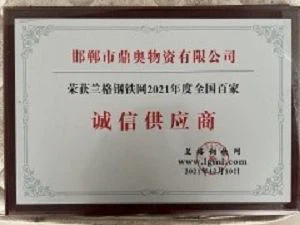

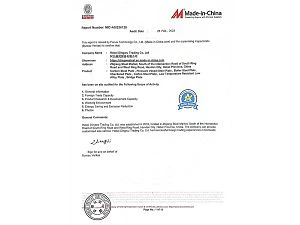
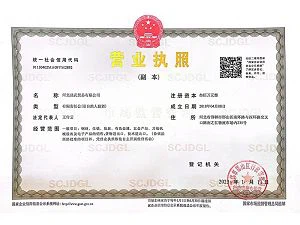
We're professional high strength low alloy plate manufacturers in China, specialized in providing high quality customized service. We warmly welcome you to wholesale discount high strength low alloy plate from our factory. Quality products and low price are available.
Carbon Steel Coil A36 ASTM, Carbon Steel Coil, High Strength Low Alloy Steel