


Thickness: 0.8-300mm
Width: 100-4500mm
Length: Customer's Requirement
Grade: SS400, ASTMA36/A283/A572/A615, SS400, ST37, ST52...
Carbon Steel Plate
Why Choose Us?
Establish in 2018, Hebei Dingwu Trading Co, Ltd is located in Handan Zhijiang Steel market. We are one of the biggest steel product suppliers in Handan. Our usual inventory is about 10,000 tons. We specialize in producing Steel Plate Of Astm Standard, Q235B Carbon Steel Plate, Low Carbon Steel Sheet, Carbon Steel Plate A36 for Building Material, and other Carbon Steel Plate.
Wide Product Range
Our main products are carbon steel plate, pressure vessel steel plate, boiler steel plate, checkered plate, corten steel plate, low temperature resistant low alloy plate, bridge plate, etc.
Quality Assurance
Our company have passed the dual guarantee of ISO9001:2000 quality management system certification and ISO14001:2004 quality management system certification.
Products Sell Well
We have good sales markets in North America, South America, Europe, Southeast Asia, the Middle East, Africa and other regions.
Quick Response
Our commitment is to respond to your inquiries within 24 hours, ensuring that you receive the information and support you require in a timely manner.
-
![Carbon Steel Plate A36 for Building Material]()
-
![Low Carbon Steel Sheet]() Low Carbon Steel SheetWidth: 1000mm / 1219mm / 1240mm / 1500mm / 2000mm or as customer's requirementsread more
Low Carbon Steel SheetWidth: 1000mm / 1219mm / 1240mm / 1500mm / 2000mm or as customer's requirementsread more
Thickness: 0.5mm~100mmor as customer's requirements
Length: 2-6m or customer's requirements... -
![Q235B Carbon Steel Plate]() Q235B Carbon Steel PlateStandard: GB/T709-2006, ASTM A36, JIS G4051, DIN EN 10083, SAE 1045, ASTM A29Mread more
Q235B Carbon Steel PlateStandard: GB/T709-2006, ASTM A36, JIS G4051, DIN EN 10083, SAE 1045, ASTM A29Mread more
Thickness: 0.15mm-300mm
Width: 500-2250mm
Length: 1000mm-12000mm or according to customer's special... -
![Steel Plate Of Astm Standard]() Steel Plate Of Astm StandardWidth: 1000mm / 1219mm / 1240mm / 1500mm / 2000mm or as customer's requirementsread more
Steel Plate Of Astm StandardWidth: 1000mm / 1219mm / 1240mm / 1500mm / 2000mm or as customer's requirementsread more
Thickness: 0.5mm~100mmor as customer's requirements
Length: 2-6m or customer's requirements...


What is Carbon Steel Plate
Carbon steel plates are made from an alloy comprised of iron and carbon. Carbon Steel Plate is one of the most commonly used steels in the United States. Alloy steels can contain a variety of elements including chromium, nickel, and vanadium. If you want to know the specifications and prices of Carbon Steel Plate, please contact us!
Advantage of Carbon Steel Plate
Durability
Carbon steel plates are used to support pipelines, buildings, and roads and have the ability to absorb shock. Carbon steel is also resilient in various fields due to its strength and shock resistance capabilities.
The biggest benefit of carbon steel is its durability. It is strong and shock resistant, which is why it makes such a beneficial material for construction projects. Business places, government buildings, and residences constructed with steel materials are more resistant to natural disasters such as earthquakes and tornadoes.
Easily Malleable
Low-carbon content mild carbon steel is very flexible and may be formed, sliced, and bent into any shape and pattern that suits your preferences. As a result, you might claim that these plates are easily fordable to meet structural needs and open the door to their application in home remodeling projects.
Mild steel is so flexible that it can bend, cut, and twisted to achieve the required shape more easily than other metals. This is the reason why Carbon Steel Sheets & Plates are usually used in many industry applications. From small households to production houses to DIY or home renovations projects they all use carbon steel. Because of the huge demand, mild steel is a commonly manufactured commodity and hence a highly inexpensive material.
Weight
Steel made of mild carbon is lighter than steel made of high carbon. Its weight is in part determined by its carbon content. Mild steel is so convenient to work with, and it is often used to build vehicle components, pipelines, and even gates for houses and businesses.
Reasonably Priced
Mild carbon steel is an ideal choice for projects on a strict budget, as it is a cost-effective metal while still being affordable. However, mild steel may need to be treated to avoid corrosion, so keep this in mind.
Affordability
It's far cheaper to manufacture certain products out of carbon steel than other metals, as a little can go a long way. Its durability means less metal can be used while still performing the same function as materials – such as piping – that may be made of another metal like copper.
Assurance & Safety
When constructing homes, safety is quite important. Therefore, compared to their alternatives, carbon steel plates are a pleasure to use, especially when considering their safety. Due to their resilience to earthquakes, fires, tornadoes, hurricanes, and other natural disasters, these plates can be helpful in construction projects. They are a secure solution for building projects as a result.
Comparatively Less Weight
The amount of carbon present determines the weight of steel plates. These plates are lighter than similar plates because mild steel has a reduced carbon content, making it simpler to deal with. Because it is lightweight, mild steel is frequently used to make fences, ornaments, auto parts, and other home improvement tasks.
Economical and Worthwhile: You can get carbon steel plates at a reasonable price and as a cost-effective option. Although prices may differ depending on the mild steel plate supplier you select, they are still less expensive than copper plates. They are a cost-effective choice to take into account if you do not have a huge budget to spare for the purchase of steel plates. Additionally, these plates can be converted into thin sheets for use as pipelines, which further lowers the cost to a significant degree.
Common Uses of the Carbon Steel Plate
The Manufacturing Industry
Many of the components in the manufacturing industry are constructed from carbon steel plates. Among others, screws, bolts, gears, and other parts can be manufactured from it because of its resilience. When carbon steel plate is used for these parts, they last longer, extending the time between gear or screw replacements. ASTM A516 GR. 60 Plates are also used in manufacturing industries.
Construction of a Building
Carbon steel plates are frequently used in construction to create ships, bridges, and other kinds of commercial or industrial structures. Because of their strength, carbon steel plates can be used to make a wide range of brackets, braces, and other components needed to build a building.
Tank Storage
Plates made of carbon steel are also used to store tanks. Airtight and watertight tanks can be made from this metal by riveting and welding. A tank constructed from this material is also more economical and can be constructed for lower costs without sacrificing quality.
Machinability and Weldability of Carbon Steel Plates: Both the Machinability and weldability of carbon steel are good. It can be easily cut with a hacksaw, though burrs on the edge would need to be ground off. By heating carbon steel above its melting point, it can be made extremely hard but brittle.
Quenching and tempering are two heat-treatment techniques that can be used to harden carbon steel. Due to this, carbon steel is able to withstand corrosion better than mild steel, which lacks this property natively.
Ductility And Flexibility: The highest ductility, and ability to be shaped of any steel is found in carbon steel. It is frequently used in the automobile industry because it provides exceptional strength, heat resistance, and flexibility. Parts that need to bend or flex often are frequently made of this sort of steel.
Type of Carbon Steel Plate

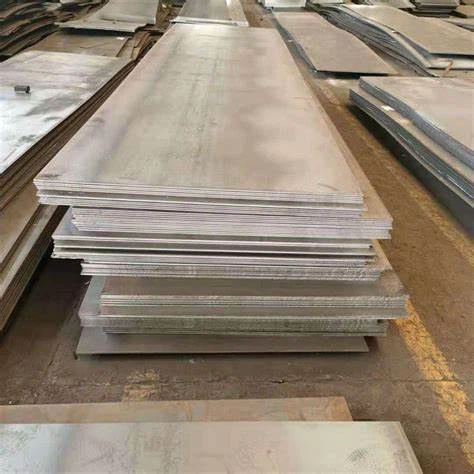
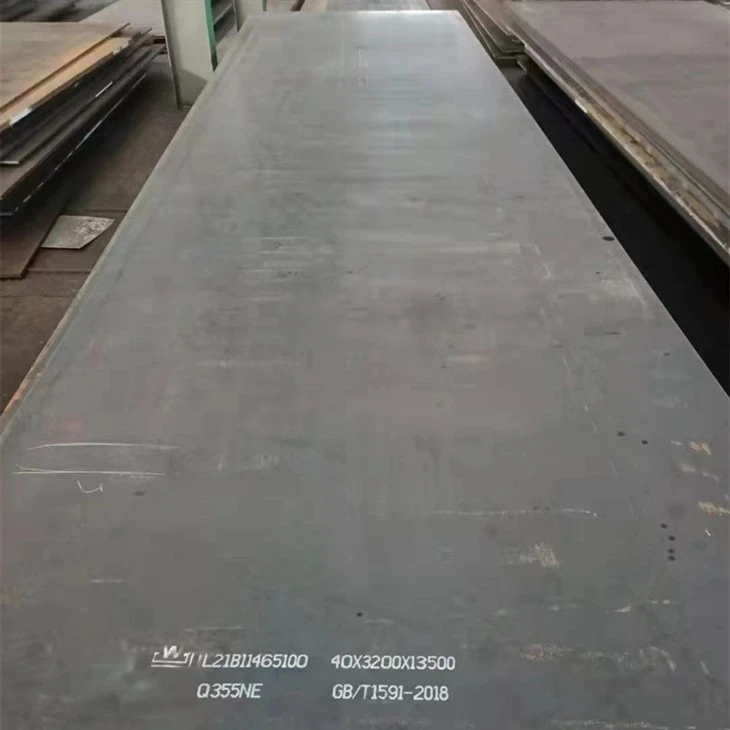
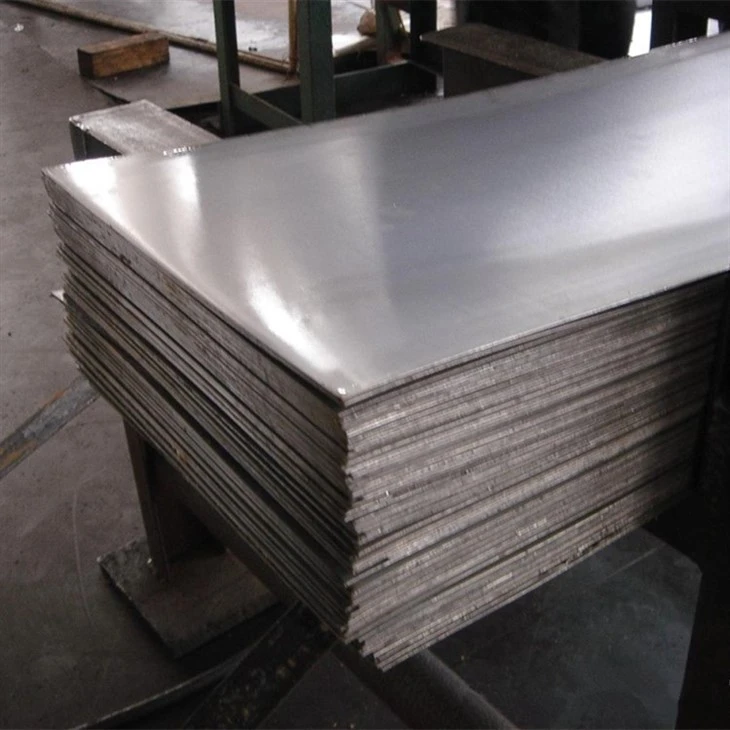
Hot Rolled Carbon Steel Plate
Hot rolled carbon steel plate is the easiest and cheapest sheet steel to find. It is fairly ductile and can be easily formed with hand tools. But its dimension and surface quality are less refined compared to cold rolled carbon steel plates. As its name implies, it is often fabricated in the hot rolling process.
Cold Rolled Carbon Steel Plate
Cold rolled carbon steel plate is made with much tighter dimensional tolerances and the surface is more uniform and nice-looking. Typically, its edges are quite square. Cold-rolled carbon steel plate is harder, stronger but less ductile. When making, it usually takes hot rolled carbon steel plates as substrate and is molded at room temperature.
Carbon Structural Steel Plate
Depending on the different carbon content, it can be divided into ordinary carbon structural steel plates and high-quality carbon structural steel plates. They are mainly used in the construction industry. So the quality, durability, and performance of carbon structural steel plates must meet the highest standard. That is to say, the carbon structural steel plate must be corrosion resistant and can withstand the overweight load and pressure.
Free-cutting Carbon Steel Plate
Free-cutting carbon steel plate is a kind of steel plate that adds some elements to make the steel much brittle so that the steel plate is easily broken when cutting. It is beneficial to improve the cutting speed and prolong the life of the cutting tool.
Boiler Steel Plate
Boiler steel plate is one of the key materials in boiler manufacturing. It mainly refers to the hot-rolled medium steel plate used for the manufacture of superheaters, boiler chambers, shells, support hangers, etc. Carbon boiler steel plate often has good welding and cold bending properties, and good resistance to alkaline, corrosion, and oxidation at high temperatures.
Tank Steel Plate
Tanks made with carbon steel tend to be more affordable, wear-resistant, and durable. This makes the tank carbon steel plates have wide applications in industrial, commercial, and residential establishments. They are popular in the building of oil and gas tanks, storage tanks, water tanks, and tanks for storage other all kinds of stuff.
Carbon Shipbuilding Steel Plate
Shipbuilding steel plate refers to the steel plate produced with special structural steel for shipbuilding and used to manufacture the hull structure of ships sailing in ocean, coastal and inland waterways. The common thickness is 2.5-50 mm. It is compatible with high strength, high heat input soldering, and low temperature. According to the minimum yield strength, it is available in general carbon shipbuilding steel plates and high strength carbon shipbuilding steel plates.
Factors for Selecting Steel Plate
Understand Your Application Requirements
First things first, ensure you clearly define your application requirements. Consider the specific environment in which the steel plate will be used.
For instance: Will the plate be used for a heavy-duty construction project? Or will it be part of an application for machinery or industrial equipment? Determine the load-bearing capacity, corrosion resistance, and impact resistance required. This understanding will help you narrow your choices and focus on the appropriate steel grades.
Evaluate Steel Plate Grades
Now it is time to hone-in on the proper steel plate grade. Steel plate is available in various grades, each designed to meet specific performance requirements.
Consider Steel Plate Weight, Size, and Thickness
Determining the correct plate weight, size, and thickness helps to ensure structural stability and safety.
Evaluate the load and stress factors to which the steel plate will be subjected. Consider the dimensions of the area where the plate will be installed. Consider any weight limitations or space restrictions. Ensure that the thickness of the steel plate is adequate to withstand the anticipated loads without compromising structural integrity.
A steel plate weight calculator can be valuable during your evaluation process. Ryerson offers an online weight calculator for plate and other shapes.
Check Specialized Requirements
In certain applications, specialized steel plates may be required. These can include high-temperature applications, corrosive environments, or situations demanding specific certifications such as ABS (American Bureau of Shipping) or ASTM (American Society for Testing and Materials).
Another specification to consider is ASME (American Society of Mechanical Engineers). This is particularly relevant for tank and pressure vessel applications.
Identifying unique requirements for your project will be critical in your conversation with steel suppliers. With this information, the right supplier can best identify steel plates that meet the necessary specifications and certifications.
Request Samples and Test Reports
Request samples of the steel plates you are considering. Examine their physical properties, test them for quality assurance, and assess their suitability for your application.
Ask your steel supplier to supply you with test reports and certifications, such as material composition, mechanical properties, and any tests conducted. Please note that a steel test report will not be available in every instance. These reports are contingent upon the producing steel mill.
Find the Right Steel Supplier
Choosing a reputable steel supplier is essential with any steel purchase. Beyond having a broad catalog of options, your steel plate supplier should have a proven track record of helping customers navigate the aforementioned five factors.
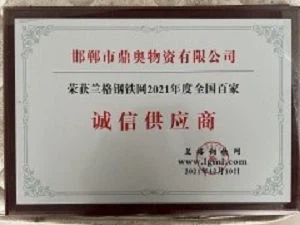
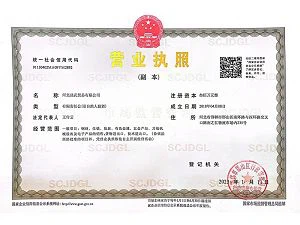
Certifications
Frequently Asked Questions
Q: What Are Carbon Steel Plates in Brief?
A: Carbon steel is a material for producing tools and other items since it is sturdy, but if you don't take good care of it then it can rust. Iron ore is heated to temperatures between 1,200 and 1,500 degrees Fahrenheit in an atmosphere free of oxygen to create carbon steel. As a result, the iron ore becomes brittle and can be molded into various shapes. It also increases the metal's durability compared to other metals.
Carbon steel has a wide range of applications, including the manufacture of automotive parts and knife blades. Because it rusts less frequently than other types of steel, carbon steel is typically simple to weld.
Steel plates that have undergone the carbonitriding process to make them harder are known as carbon steel plates. In this procedure, the steel is heated in an atmosphere devoid of oxygen before being quenched in oil.
Due to its ability to be welded and machined, carbon steel is predominantly employed for structural applications. Additionally, it is quite hard, making it strong enough to withstand use in cutting objects while remaining safe for use.Carbon steel is a material for producing tools and other items since it is sturdy, but if you don't take good care of it then it can rust. Iron ore is heated to temperatures between 1,200 and 1,500 degrees Fahrenheit in an atmosphere free of oxygen to create carbon steel. As a result, the iron ore becomes brittle and can be molded into various shapes. It also increases the metal's durability compared to other metals.
Carbon steel has a wide range of applications, including the manufacture of automotive parts and knife blades. Because it rusts less frequently than other types of steel, carbon steel is typically simple to weld.
Steel plates that have undergone the carbonitriding process to make them harder are known as carbon steel plates. In this procedure, the steel is heated in an atmosphere devoid of oxygen before being quenched in oil.
Due to its ability to be welded and machined, carbon steel is predominantly employed for structural applications. Additionally, it is quite hard, making it strong enough to withstand use in cutting objects while remaining safe for use.
Carbon steel has a wide range of applications, including the manufacture of automotive parts and knife blades. Because it rusts less frequently than other types of steel, carbon steel is typically simple to weld.
Steel plates that have undergone the carbonitriding process to make them harder are known as carbon steel plates. In this procedure, the steel is heated in an atmosphere devoid of oxygen before being quenched in oil.
Due to its ability to be welded and machined, carbon steel is predominantly employed for structural applications. Additionally, it is quite hard, making it strong enough to withstand use in cutting objects while remaining safe for use.Carbon steel is a material for producing tools and other items since it is sturdy, but if you don't take good care of it then it can rust. Iron ore is heated to temperatures between 1,200 and 1,500 degrees Fahrenheit in an atmosphere free of oxygen to create carbon steel. As a result, the iron ore becomes brittle and can be molded into various shapes. It also increases the metal's durability compared to other metals.
Carbon steel has a wide range of applications, including the manufacture of automotive parts and knife blades. Because it rusts less frequently than other types of steel, carbon steel is typically simple to weld.
Steel plates that have undergone the carbonitriding process to make them harder are known as carbon steel plates. In this procedure, the steel is heated in an atmosphere devoid of oxygen before being quenched in oil.
Due to its ability to be welded and machined, carbon steel is predominantly employed for structural applications. Additionally, it is quite hard, making it strong enough to withstand use in cutting objects while remaining safe for use.
Q: Can Stainless Steel Weld to Carbon Steel?
A: Though it is technically possible to weld these different types of metals together, the popular consensus is that to do so is not advisable. The welding of carbon and stainless steel is not typically performed as they have differing levels of electrical conductivity. Carbon steel is normally preheated during resistance welding because it is more electrically conductive and doesn't heat up as quickly as stainless steel. Therefore, reaching the right weld temperature is often extremely difficult. Therefore, it is generally advised that steels of similar types be welded together rather than mixing and matching.
Q: What is the difference between carbon steel and stainless steel in application?
A: Stainless steel has a wide range of uses and industrial applications, depending on the type of steel used. Stainless steel was first used in the automotive industry by Ford in the 1930s by Ford, and has since been used in cars for exhaust systems, grills, trims, and structural components. This extends to aircraft construction, where it is used in aeroplane frames, jet engines, and landing gear. Its resistance to corrosion, low maintenance, and how easy it is to clean makes it useful for transporting and interacting with chemicals, and it is often used in clean and sterile environments. Therefore, medical technology is also a fairly common use.
The strength, resistance, and flexibility of certain stainless steels make it a common feature in architecture, a property helped by its aesthetic features and attractive finish as well. For example, stainless steel is frequently used in the Eurostar Terminal in London and the Helix Bridge in Singapore.
One of the most common everyday uses of stainless steel is in food and the catering industry, where it is used to manufacture cookware, cutlery, kitchen accessories, and appliances. Utensils like knives are made from the less ductile grades of stainless steel, whilst the more ductile grades are used for grills, ovens, saucepans, and sinks.
The various types of carbon steel are applicable to a wide range of industries and sectors. Low-carbon steels can be used in automobile body components, pipes, construction and bridge components, and food cans. Medium-carbon steel is useful for railway tracks, train wheels, crankshafts, and gears and machinery parts requiring its higher strength and toughness, and similarly high-carbon steel is used in cutting tools, springs high strength wire and dies for its hardness.
The strength, resistance, and flexibility of certain stainless steels make it a common feature in architecture, a property helped by its aesthetic features and attractive finish as well. For example, stainless steel is frequently used in the Eurostar Terminal in London and the Helix Bridge in Singapore.
One of the most common everyday uses of stainless steel is in food and the catering industry, where it is used to manufacture cookware, cutlery, kitchen accessories, and appliances. Utensils like knives are made from the less ductile grades of stainless steel, whilst the more ductile grades are used for grills, ovens, saucepans, and sinks.
The various types of carbon steel are applicable to a wide range of industries and sectors. Low-carbon steels can be used in automobile body components, pipes, construction and bridge components, and food cans. Medium-carbon steel is useful for railway tracks, train wheels, crankshafts, and gears and machinery parts requiring its higher strength and toughness, and similarly high-carbon steel is used in cutting tools, springs high strength wire and dies for its hardness.
Q: Is carbon steel high quality?
A: All carbon steels are susceptible to rust, making them unfit for use in a wide variety of end-use applications. Overall, carbon steel is excellent if you're looking for a low-cost metal, but generally unfit for high-quality or high-precision manufacturing operations.
Q: Is carbon steel just iron?
A: Steel is a type of iron alloy. It has a lower carbon content than cast and wrought iron, and it features other alloying elements to give it its properties. Like iron, there are different types of steel, but all of them contain iron. Carbon steel – This is a basic type of steel that contains about 1% of carbon.
Q: Does carbon steel rust easily?
A: Yes, carbon steel does rust because it lacks the corrosion-resistant properties of its stainless steel counterpart. Although it's stronger and more durable than stainless steel, carbon steel may rust and corrode when exposed to moisture.
Q: Is carbon steel more expensive?
A: One of the most significant disadvantages of carbon steel is its high cost. Because of its increased carbon content, carbon steel is often more expensive than mild steel. Furthermore, carbon steel is more difficult to weld than mild steel, making it less appropriate for welding applications.
Q: How long does carbon steel last?
A: Lasts a Lifetime – carbon steel is 1% carbon and 99% iron, which is a highly durable and strong composite that is also malleable or pliant. You can drop, bang, over heat or otherwise handle your carbon steel cookware in a not so gentle manner and it unlikely to break or crack.
Q: How can you tell if steel is carbon steel?
A: Carbon steel, on the other hand, has a more dull, matte finish. Another common way to tell the difference is to check to see if there are any signs of oxidation (red rust). Carbon steels often contain a high amount of carbon and are susceptible to rusting when exposed to moisture, while stainless steels do not rust.
Q: Is carbon steel safe for health?
A: However, Carbon Steel, unlike old Teflon coated cookware, is completely non toxic. It only has the two chemicals in it-carbon and iron-neither of which are toxic. And the best part about Carbon Steel is that it's actually naturally non stick when you develop a seasoning layer.
Q: Is carbon steel waterproof?
A: As already mentioned, high-carbon steels are more corrosion resistant than low-carbon-content steels. However, even high-carbon steels will still rust if exposed to moisture over time.
Q: Does carbon steel scratch easily?
A: However, this also means that it can get very hot very quickly, and if you're not careful, you can burn your food or damage your pan. Start with low to medium heat and adjust as needed. Carbon steel is a relatively soft metal, which means that it can be scratched or damaged by metal utensils.
Q: What is carbon steel best for?
A: The benefits of carbon steel include responsiveness to temperature changes, a lightweight and easy-to-handle design, a seasoning that improves with use, and durability-not unlike a well-seasoned carbon steel wok. A good carbon steel skillet is one of those long-lasting kitchen tools that will remain useful for years.
Q: Is carbon steel safe for cooking?
A: Carbon steel is composed of carbon and iron. Both of those materials have been deemed safe for cooking. Since there is no layer of coating on the carbon steel, you don't have to worry about any toxins leaching into your food as the pan heats up.
Q: Can I wash carbon steel with soap?
A: Wash your seasoned carbon steel cookware by hand with warm water. You can use a small amount of soap. If needed, use a pan scraper, scrub brush, or nonscratch pad.
We're professional carbon steel plate manufacturers in China, specialized in providing high quality customized service. We warmly welcome you to wholesale discount carbon steel plate from our factory. Quality products and low price are available.
H shaped Steel, Simple Shape, Gi Coil Coated